

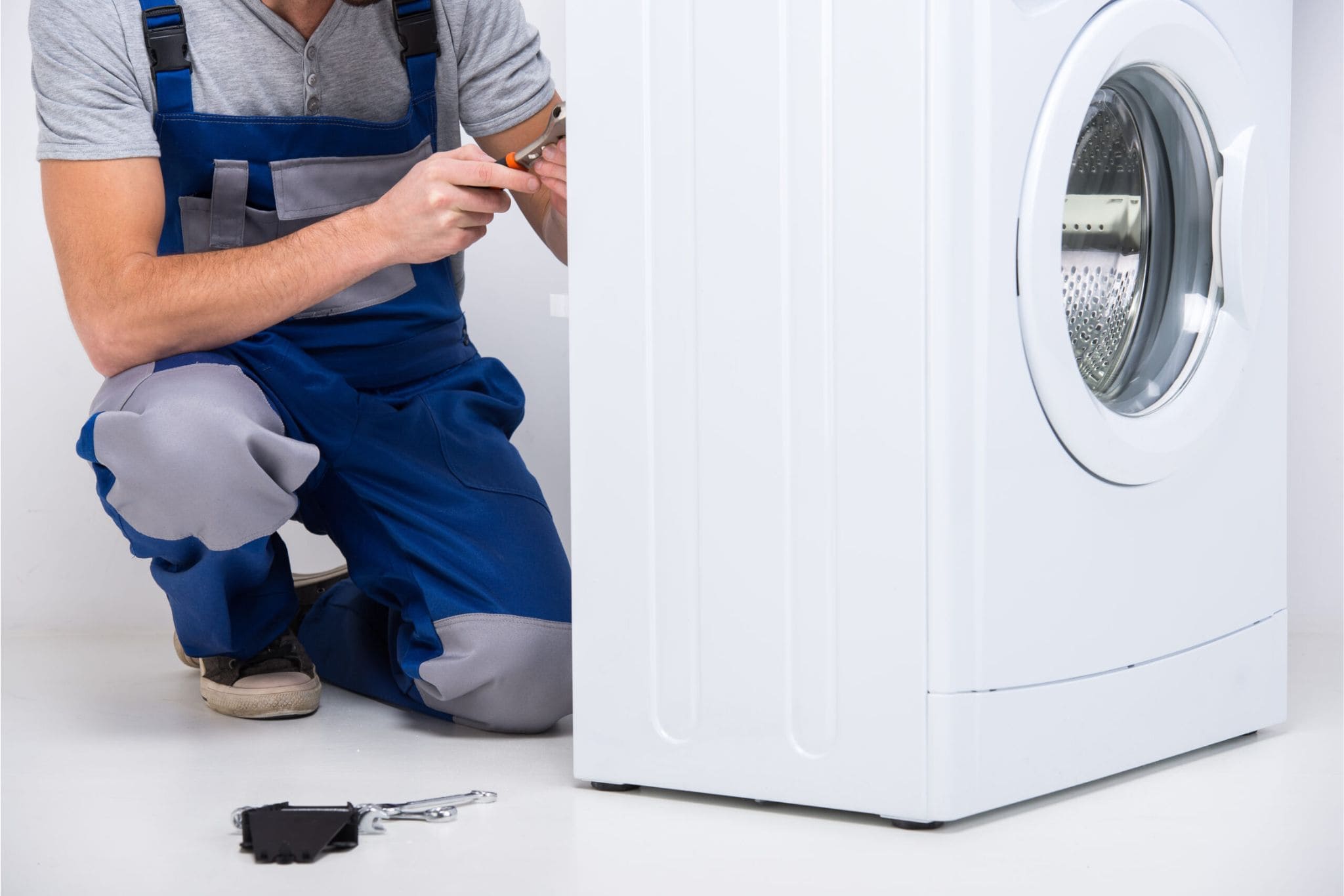
Written by Oleh Shymon, Owner of #1 Appliance Repair in Toronto. We repair high-efficiency washers daily across the GTA and publish practical guides to help Canadian households keep appliances running smoothly.
Method note
Steps reflect what we do on calls in the GTA plus the public docs below. Exact layouts vary by model; always defer to your specific service or owner’s manual.
What the Compression Chamber Is
On modern washers, the compression chamber (also called the air trap, air dome, or pressure chamber) is a small plastic cavity mounted to the tub. As the tub fills, air in this chamber gets compressed and travels through a thin hose to the water-level/pressure switch on the control system. That switch decides when to stop filling, when to tumble, and when to spin. If the chamber is cracked, clogged with detergent sludge, or the hose is split, your washer can overfill, stop too early, throw level errors, or leave clothes dripping wet.
Common clues you’re dealing with the chamber/pressure-system:
-
Overfilling or “water level” fault codes despite normal inlet flow
-
Endless filling/draining cycles or “suds”/“OE/5E/LE” style errors
-
Visible gunk in the hose or a sour odour from the sump area
Why this matters: the level-sensing system is safety-critical. Incorrect readings can cause leaks and electrical hazards if ignored. Always disconnect power before servicing.
Clean or Replace
A blocked chamber can often be cleaned; a cracked or deformed one must be replaced. Start with a quick, safe triage:
| Symptom you see | Likely cause | People-first next step |
|---|---|---|
| Won’t stop filling; chamber feels soft but hose is clogged with residue | Detergent/softener sludge | Clean the chamber + hose; re-test |
| Level errors after cleaning; visible hairline crack at chamber spigot | Physical damage | Replace chamber |
| Wet clothes after final spin; drain errors; coin/lint in pump filter | Pump/filter restriction confusing level logic | Clear drain filter, then reassess chamber/hoses |
| Random overfill + water inside control area | Hose split/detached; unsafe condition | Stop and replace hose/chamber; inspect pressure switch path |
If the chamber is intact and rinses clean, reinstall and monitor. If not, replacement is inexpensive and straightforward on many front-loaders.
Replacing the Compression Chamber
Every brand mounts the chamber differently, but the workflow is consistent. The outline below follows service-manual conventions for popular machines and will feel familiar if you’ve replaced pump filters or hoses before.
A. Access the sump area
-
Unplug power and shut off water. Pull the machine forward slightly if needed.
-
Remove the top panel (rear screws) or the lower front kick plate, depending on model. Some models require removing the front panel after the door boot clamp—consult your manual.
B. Identify the chamber and hose
You’ll see a small plastic bulb/chamber attached to the outer tub, with a small hose leading up to the pressure switch near the top frame. Take photos for re-routing later.
C. Drain and de-sludge
Place a tray beneath the sump. If your model has a debris/pump filter, crack it open to drain residual water—this avoids spills while you work.
D. Release clamps and remove
-
Loosen the small pressure hose clamp at the chamber spigot; detach the hose.
-
Free any screws or tabs that hold the chamber to the tub. Some are friction-fit with a gasket; gently twist/pull to remove.
-
Inspect the hose: if stiff, cracked, or sticky, replace it. Service manuals explicitly pair this step with chamber/air-dome service.
E. Install the new chamber
-
Clean the tub port. Seat the chamber squarely; confirm any O-ring is seated.
-
Reconnect the pressure hose; route it in smooth loops with no kinks or low sags where water could sit. Secure with the proper clamp tension (snug, not crushing).
-
Reinstall panels in reverse order.
F. Power-on checks
-
Restore water, then power.
-
Run a quick fill test: Start a normal cycle, cancel at 1–2 minutes, verify the water stops at the expected level, then drains.
-
Watch for leaks at the chamber and hose during fill and drain.
-
If your model has a diagnostic or calibration routine, run it now (many brands do; check your manual).
Top-load notes: Many top-loaders use the same air-dome/pressure-hose concept but access from the rear/top. The chamber may be molded into a tub grommet or side fitting; otherwise, the steps mirror the front-load process.
Tools, parts, and prep
Tools: 1/4″ nut driver, screwdriver, small pliers, pick or plastic spudger, flashlight, towels/tray, mild cleaner, and a few spring or screw clamps sized for your hose.
Parts: replacement compression chamber / air trap (model-specific), new pressure hose, clamps/gasket as required by your model.
Safety prep: unplug the washer and turn off water. If you must move the unit, protect floors. Follow Canadian electrical safety best practices—disconnect/lock out power before maintenance; never work live; keep the work area dry.
Cost, Time, and When to Call a Pro
Time & difficulty: A careful DIYer with basic tools typically spends 45–90 minutes including cleanup and leak checks. If panel removal is involved (e.g., full front-panel models), add time.
What it costs in Canada:
-
DIY parts: About $11–$60 CAD for the chamber/air trap, model-dependent (examples from LG Canada and Canadian retailers; Whirlpool-pattern parts often price higher than LG’s small chamber).
-
Professional repair: Canadian guides place typical washer repair totals between $150–$400 CAD (parts + labour), depending on brand and access. Home-service price guides and local shops publish similar ranges.
Quick cost & scope table
| Path | What’s included | Typical CAD |
|---|---|---|
| DIY replace chamber | OEM/compatible chamber, clamps, your labour | $11–$60 (parts) |
| Pro repair (GTA) | Diagnosis, part, reseal, test, warranty | $150–$400 (parts+labour) |
Call a pro immediately if you see: persistent overfilling, leaks, burning smell, repeated level or drain errors after replacement, or any sign of water near electronics. We handle same-day diagnostics across the GTA and carry common chambers/hoses on the truck.
Mini FAQ
Is compression chamber the same as air trap or air dome?
Yes. Different brands use different names for the same job: a small cavity that transmits air pressure from the tub to the sensor while keeping splashing water out. Patents and repair docs use those terms interchangeably.
Can I just clean it instead of replacing?
If plastic is intact, a clean may buy you time. If it’s softened, cracked, or clogged repeatedly, replace. Guides show both routes, but replacement is the durable fix.
Do I need to recalibrate the sensor?
Most models don’t need calibration after a trap swap. If your service manual offers a self-test for the water-level sensor, run it once after the repair.
If you’d rather not open the machine yourself, we offer same-day service across Toronto and the GTA. Share your model number and any error codes, and we’ll arrive with the likely parts and finish with a leak test before we go same day washing machine repair
Sources & further reading
-
LG air dome replacement — role of the chamber and failure symptoms.
-
Whirlpool service manual — pressure hose/water-level system service flow.
-
Electrolux service manual — checks for pressure-system/air-trap free and clear.
-
Samsung debris/pump filter cleaning — reduces back-pressure/odours.
-
Canadian safety (CCOHS) — disconnect/lockout before maintenance.
-
Canadian part & cost references — LG Canada parts; Reliable Parts; PartsNet; local cost guides.


